-
-
Boreal Black and White Spruce
Back to Web Atlas
-
Boreal Black and White Spruce 
The Boreal Black and White Spruce Zone forms part of the vast Boreal Forest that stretches across all of northern Canada. This zone has long areas of untampered wilderness, long cold winters and abundant wildlife, typical of the Canadian north. Forests and Muskeg dominate the area along with bears, grey wolves, caribou, and moose.
Range
The Boreal White and Black Spruce Zone covers most of the Alberta Plateau in British Columbia’s northeast and lower elevations in the central north. This is one of British Columbia’s largest zones as it covers over 10 percent of the province’s total land area. The communities of Fort St. John, Fort Nelson and Dease Lake
are included in this area.
Alberta Plateaus

Climate
Winters are long and extremely cold while the summer growing season is warm but short. The zone receives little precipitation and the least snowfall of all northern zones; however, there are pockets of permafrost are common in peatlands in the northern areas. Trees and most other plants grow slowly in the cold climate and dead plants decompose slowly.
Vegetation
This zone is a mixture of two ecosystems: the upland forests and the muskeg. Upland forests are more common in the east and in mountainous parts of the zone in the west. Muskeg is most extensive on the poorly-drained northeastern lowlands. In the upland forest areas, mixed stands of trembling aspen and white spruce and mixed stands of lodgepole pine and black spruce dominate. Wetter areas have denser communities of black spruce and moss. Muskeg is a peatland combination of bogs and nutrient poor marshes that cover extensive parts of northeast British Columbia. Stunted black spruce and tamarack trees, brown mosses and boreal grasslands are dominant in this area.
White Spruce Black Spruce


Wildlife
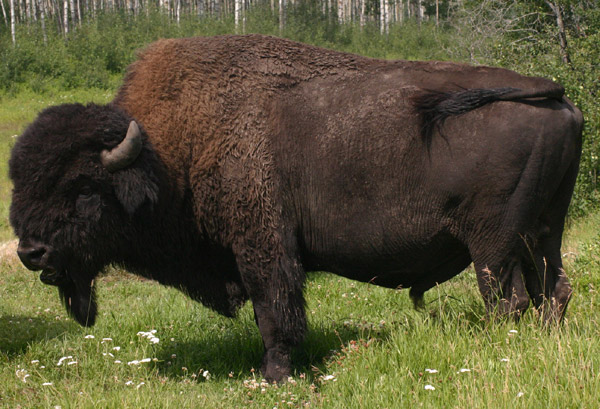
This zone is rich in wildlife, particularly ungulates. Moose, caribou, mule deer, black bear, grizzly bear and grey wolf are common and widespread. White-tailed deer, Rocky Mountain elk, Stone sheep, mountain goats and Wood bison inhabit the rugged terrain of the Rockies and further west. Wood bison were once very abundant but due to hunting, there are fewer than 300 left in the world. Birds and small mammals are everywhere in this zone but they thrive best in the deciduous forests that follow fire. Because of the cold climate, there are very few amphibians and reptiles; they live in the warmer valley bottoms.
Grizzly Bear Cubs Grey Wolf Wood Bison


Resources
This zone has low potential for forestry since unfavourable sites like floodplains, moist sites, and south facing dry slopes produce the most timber. However, because hardwoods, like trembling aspen and balsam polar, are more in demand, logging in this zone has recently increased. The primary industry east of the Rocky Mountains in the Alberta Plateau is oil and gas extraction and exploration. Ranching and grain production are major economic activities as well.
Oil Sands
